Prototyping Degrowth Urbanism
Reimagining long-term resilient neighborhoods
Creative Industries Kick-start Grant Scheme | Stimulieringsfonds | September 2025 - June 2026
This project translates post-growth literature into concrete urban design strategies focused on long-term resilience and independence from economic growth. Aiming to inspire urban professionals and city-makers, it proposes urban degrowth as a necessary future. The project contributes to a slowly expanding body of knowledge, by bridging theory with test design within Rotterdam neighborhoods.
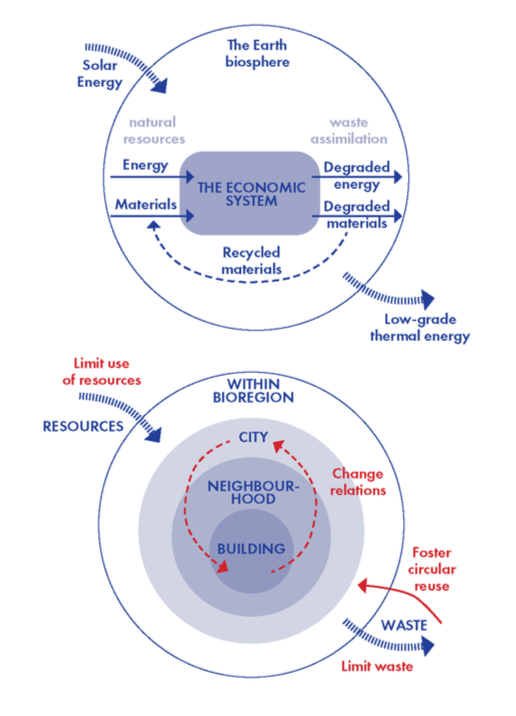
A key principle of degrowth for cities is to reduce resource and energy use, foster circular reuse, and minimize waste production, all within a framework that supports human well-being within ecological limits. However, the meaning and implementation of these principles vary depending on the scale at which they are applied—whether at the level of a building, neighbourhood, city, or region.
In other words, the relationships between buildings, neighbourhoods, cities, and regions need to be fundamentally reconfigured, together with the infrastructures, patterns of use, and forms of organization that reinforce them. And this can not happen without looking at social ecology - social relations.
The research was structured around three models, each exploring existing ideas, practices, and initiatives through a speculative What if? question.
What if urban development prioritized ecological adaptation and restoration? → ECOVILLAGES
What if neighbourhoods were held in collective ownership? → COMMUNITY LAND TRUSTS
What if neighbourhoods had to adapt to drastically reduced public funding? → NEIGHBORHOOD COOPERATIVES
After researching case studies from each of the three models, a design test was conducted to explore how these models could be scaled up as an approach to urban development, with a particular focus on neighbourhood renewal.
A full research summary is available as a PDF at the bottom of the page.
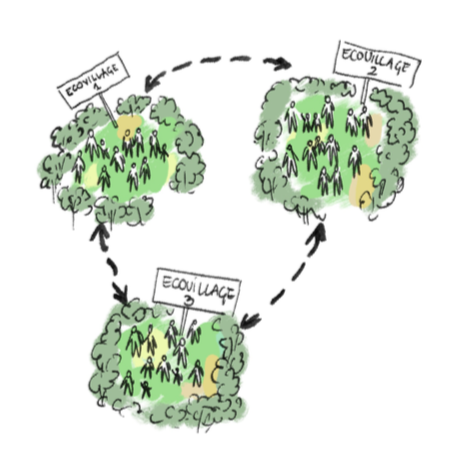
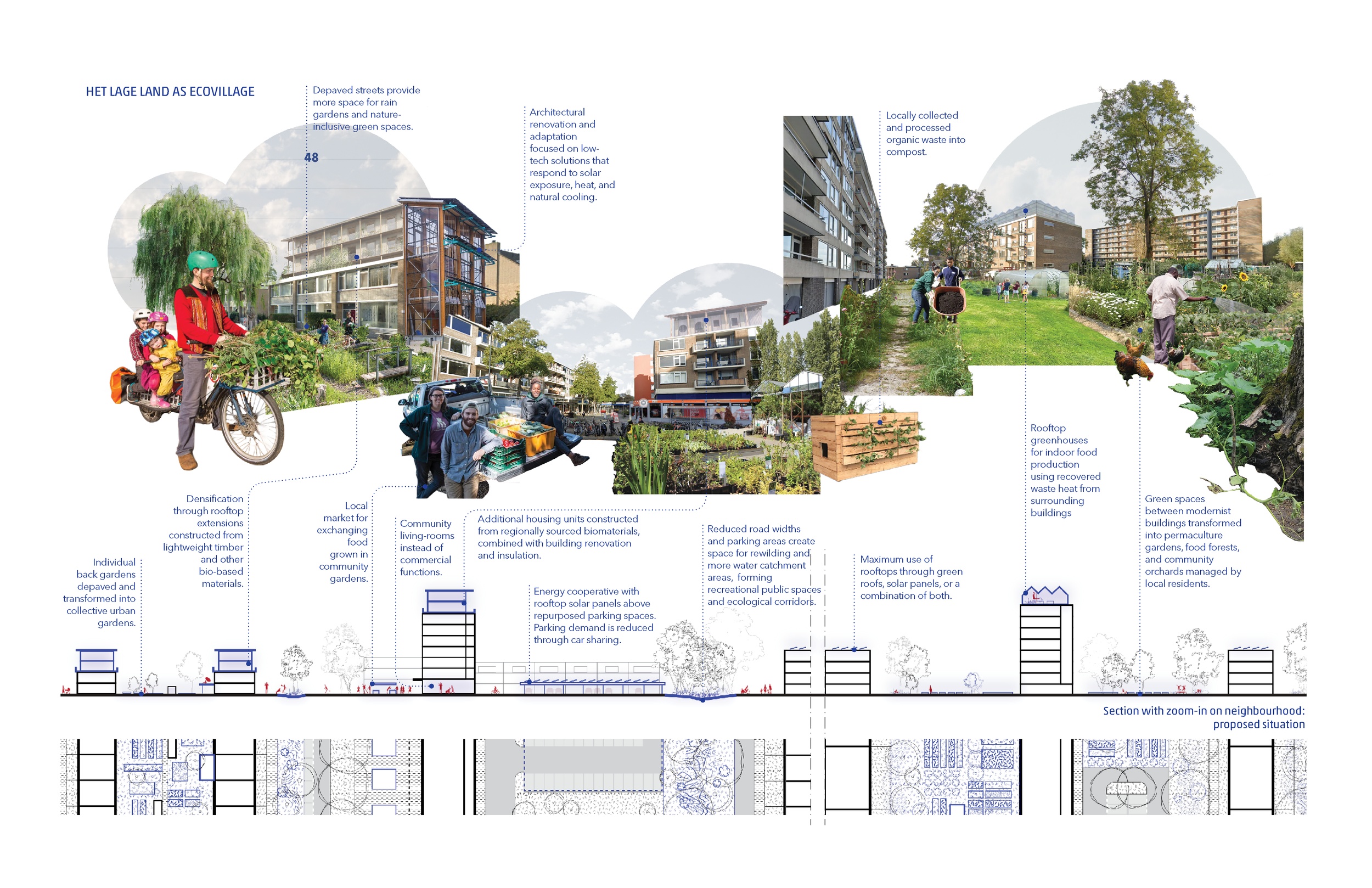
Ecovillage
Provides a holistic living environment that aims to operate within planetary boundaries through small, self- contained communities.
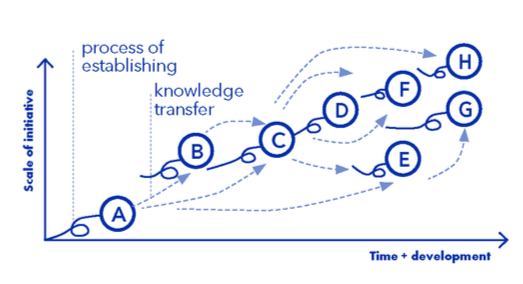
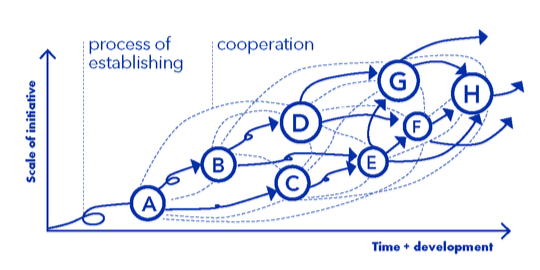
Ecovillages and expansion—once established, they share their knowledge with other starting initiatives.
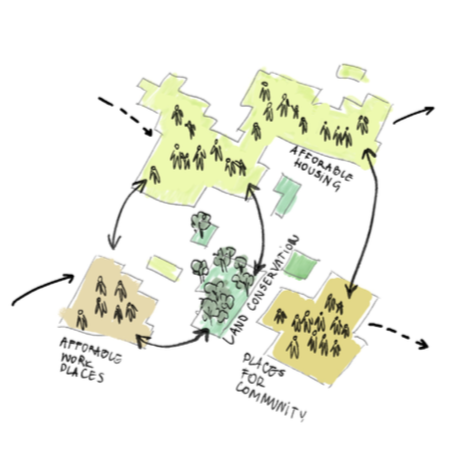
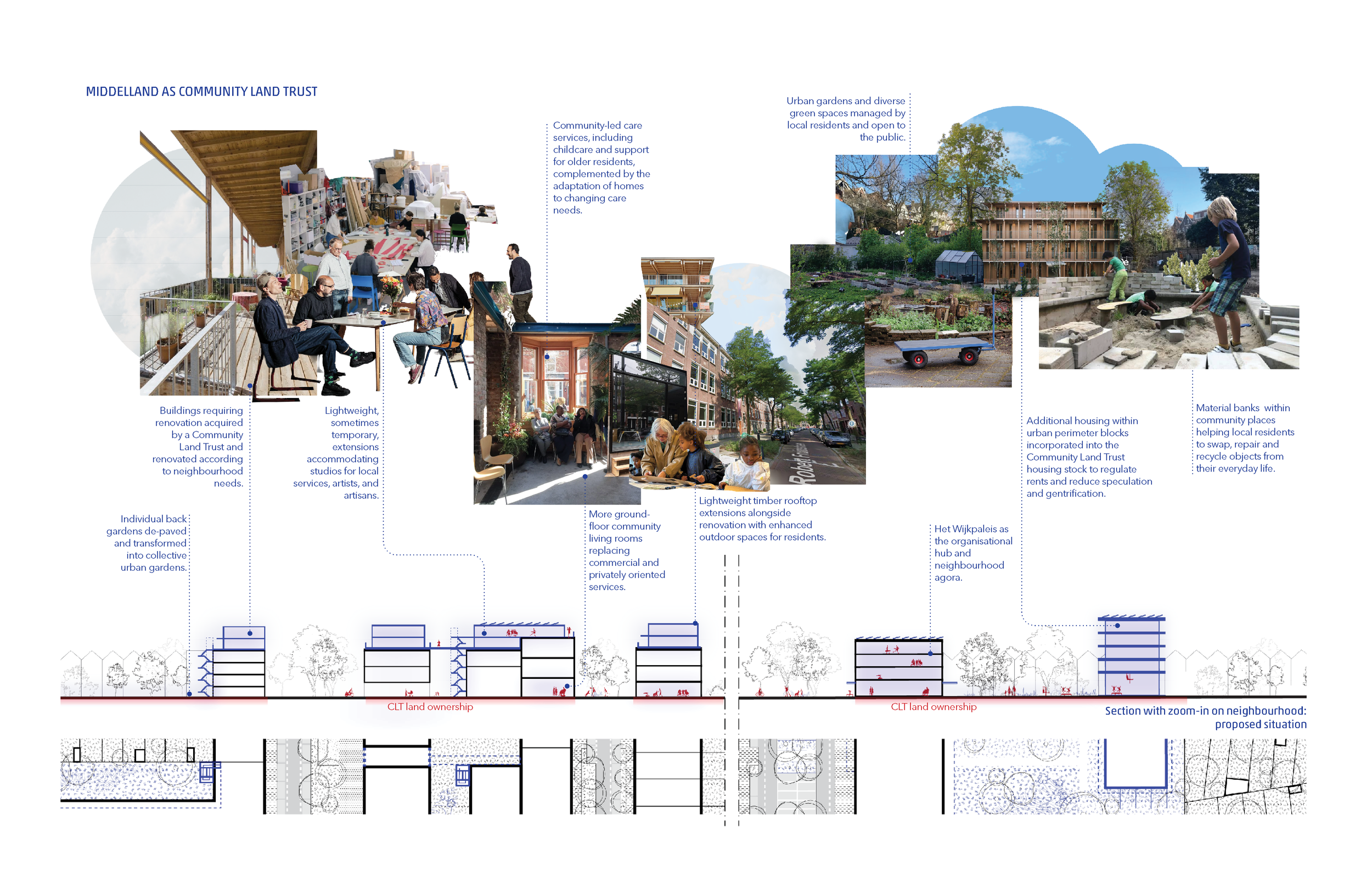
Community Land Trust
Ensures long-term affordability and resilience by removing land from the speculative market and placing it in collective stewardship. Formal stewardship of land in hands of commons.
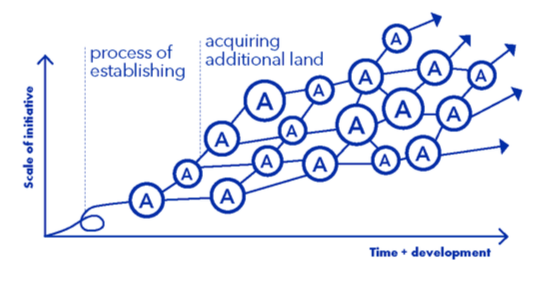
CLT and expansion—once the initial structure and trust are established, the initiative expands by acquiring additional land with increasing ease.
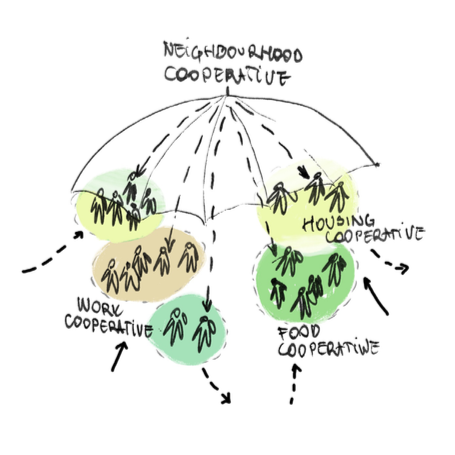
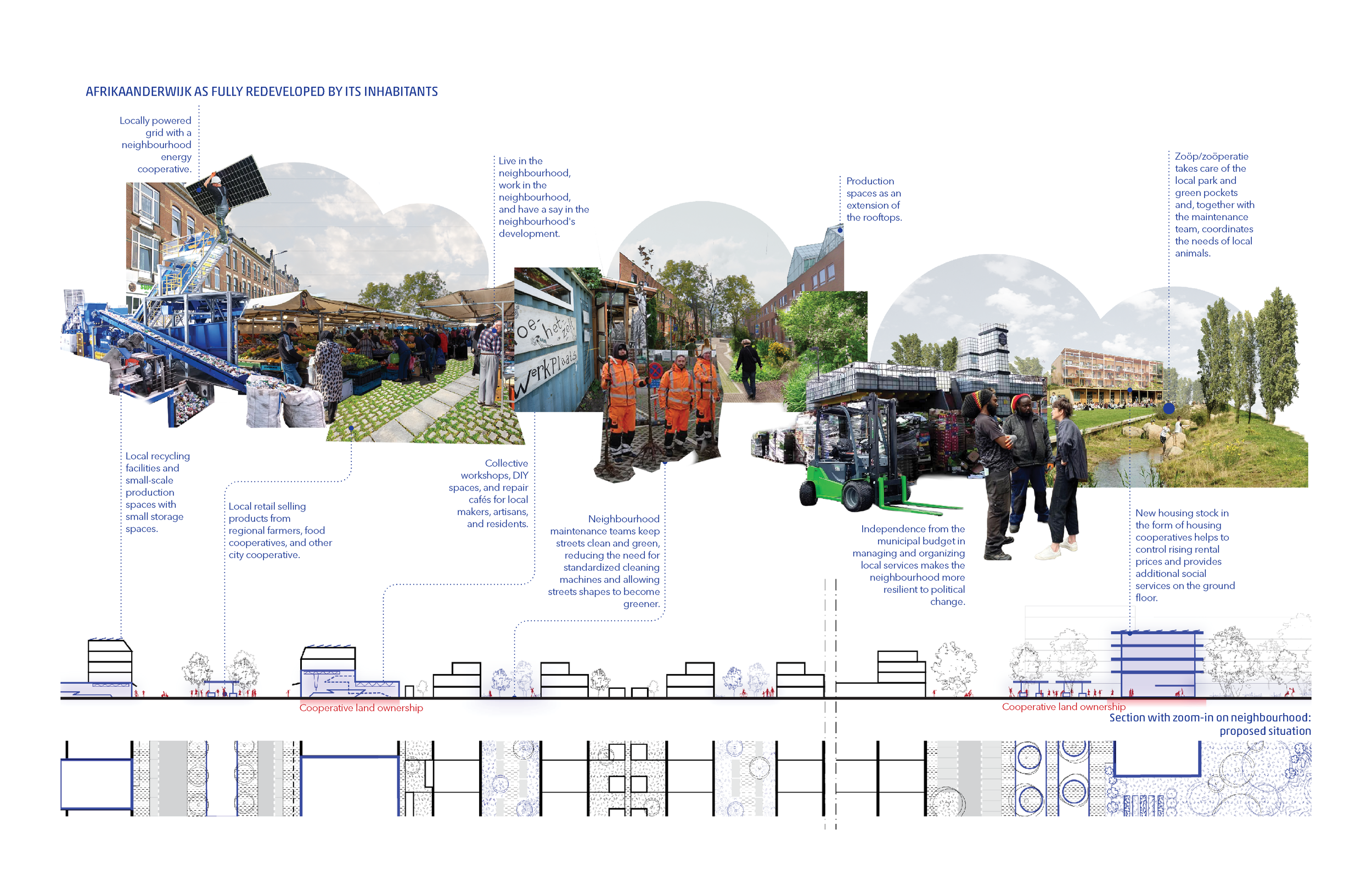
Cooperative
Community-owned organisations that strengthen local and solidarity economies while fostering participation and social cohesion. Serve as an umbrella organisation, providing a platform and network that supports and connects local initiatives within the neighbourhood.