New dictionary for designers?
Exploring potential change in professional language
Creative Industries Kick-start Grant Scheme 2025 | Team: Urbanistas Rotterdam: Anna Kozera, Kate Unsworth, Marina Vane-Samveljan
This project and the accompanying toolkit have been created with the goal of enabling designers to develop an awareness of how certain design terms should be approached, how they gain momentum, and how some terms obscure, neglect, or conceal the problems that arise from neoliberal projects.
This research into design terminology and language was initiated through a series of events and articles on René Boer's book Smooth City, organized by Urbanistas Rotterdam.

What became clear throughout this research is that we need a deeper understanding of the connotations and effects of the words we use in different contexts. By becoming more aware of these meanings, we can better recognize when language reinforces the ideals of the Smooth City—and when it opens up possibilities for designing something else.
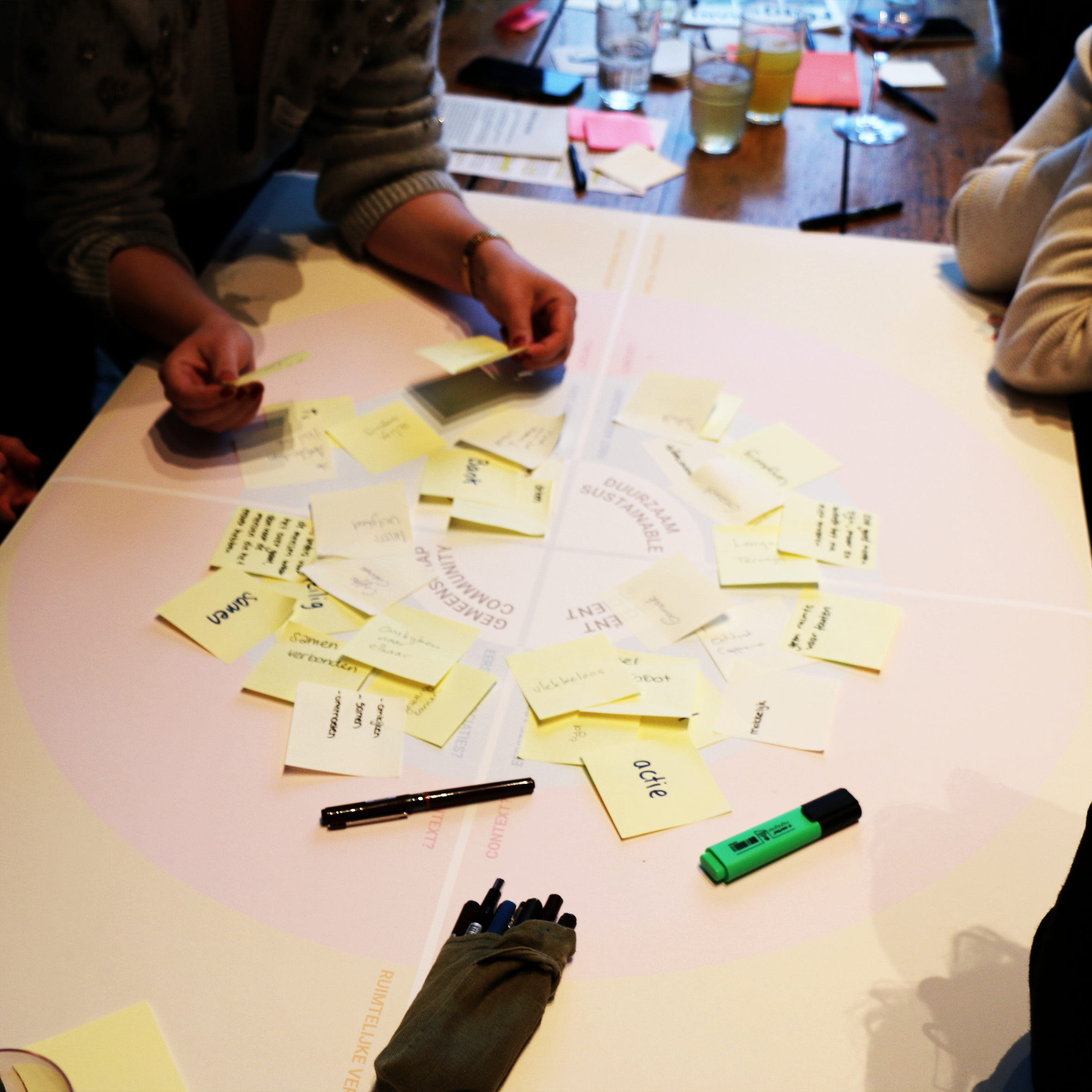
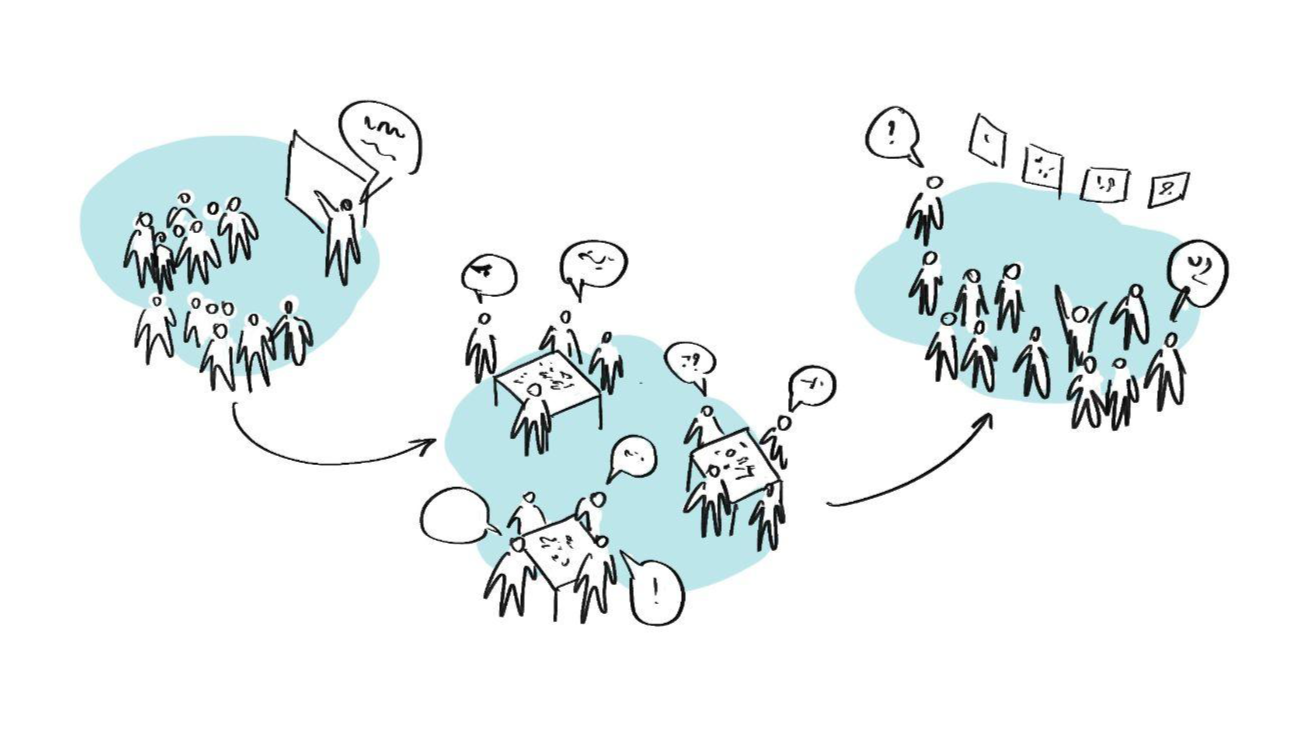
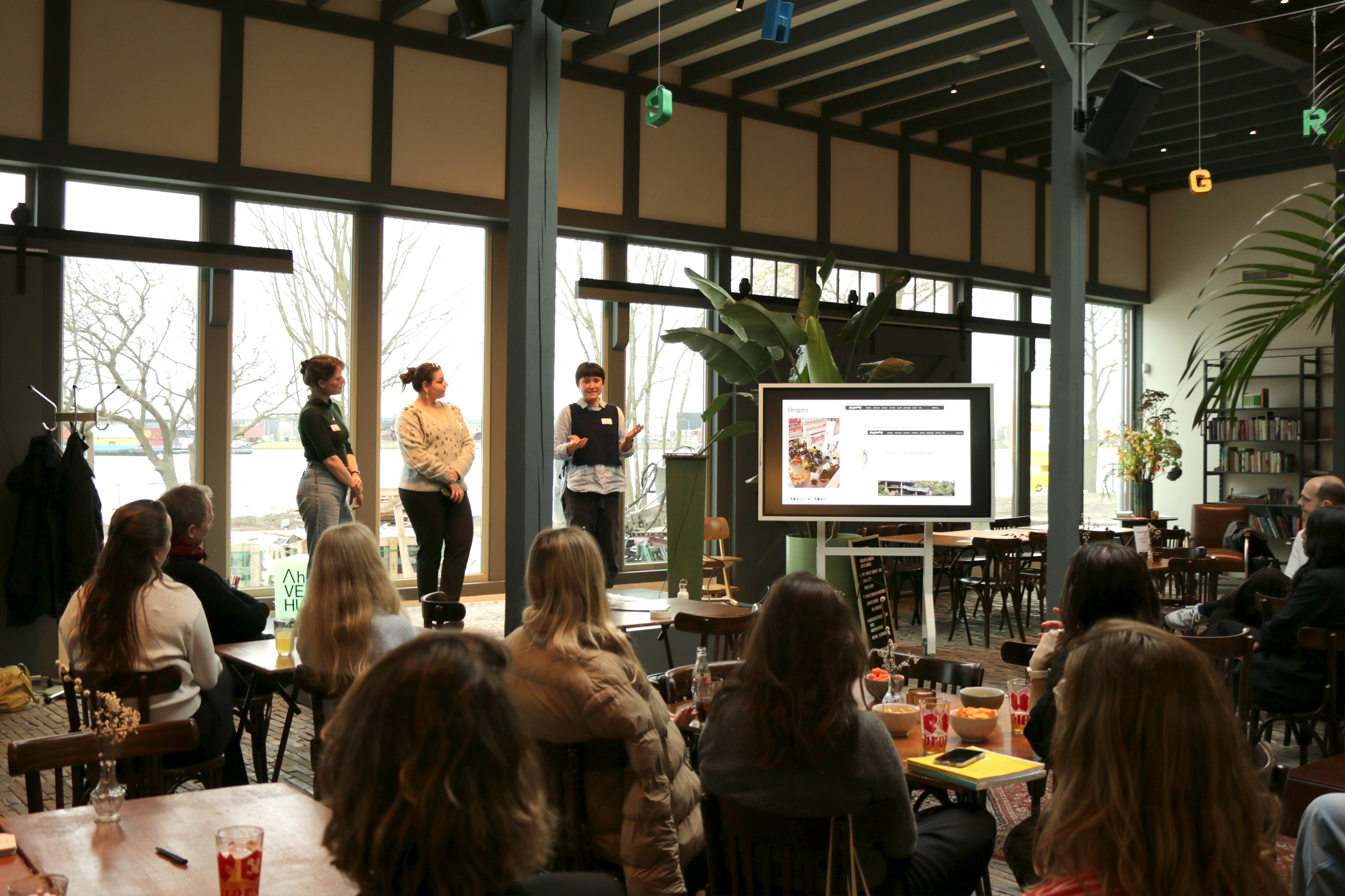
To test these assumptions, we invited a group of designers to participate in a workshop. Together, we practiced unravelling the meanings of design terms, with the aim of developing a richer collective understanding and a shared dialogue.
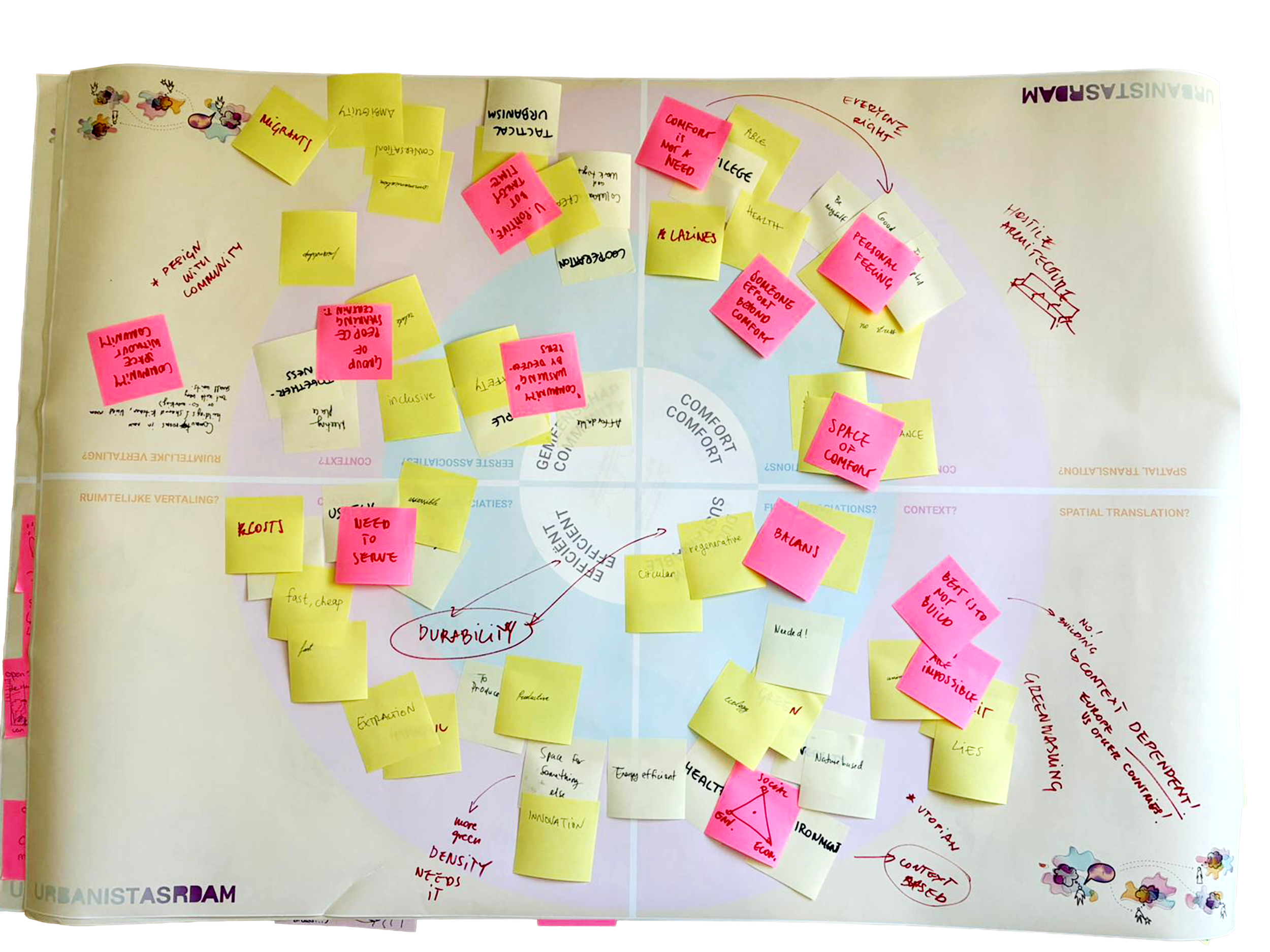
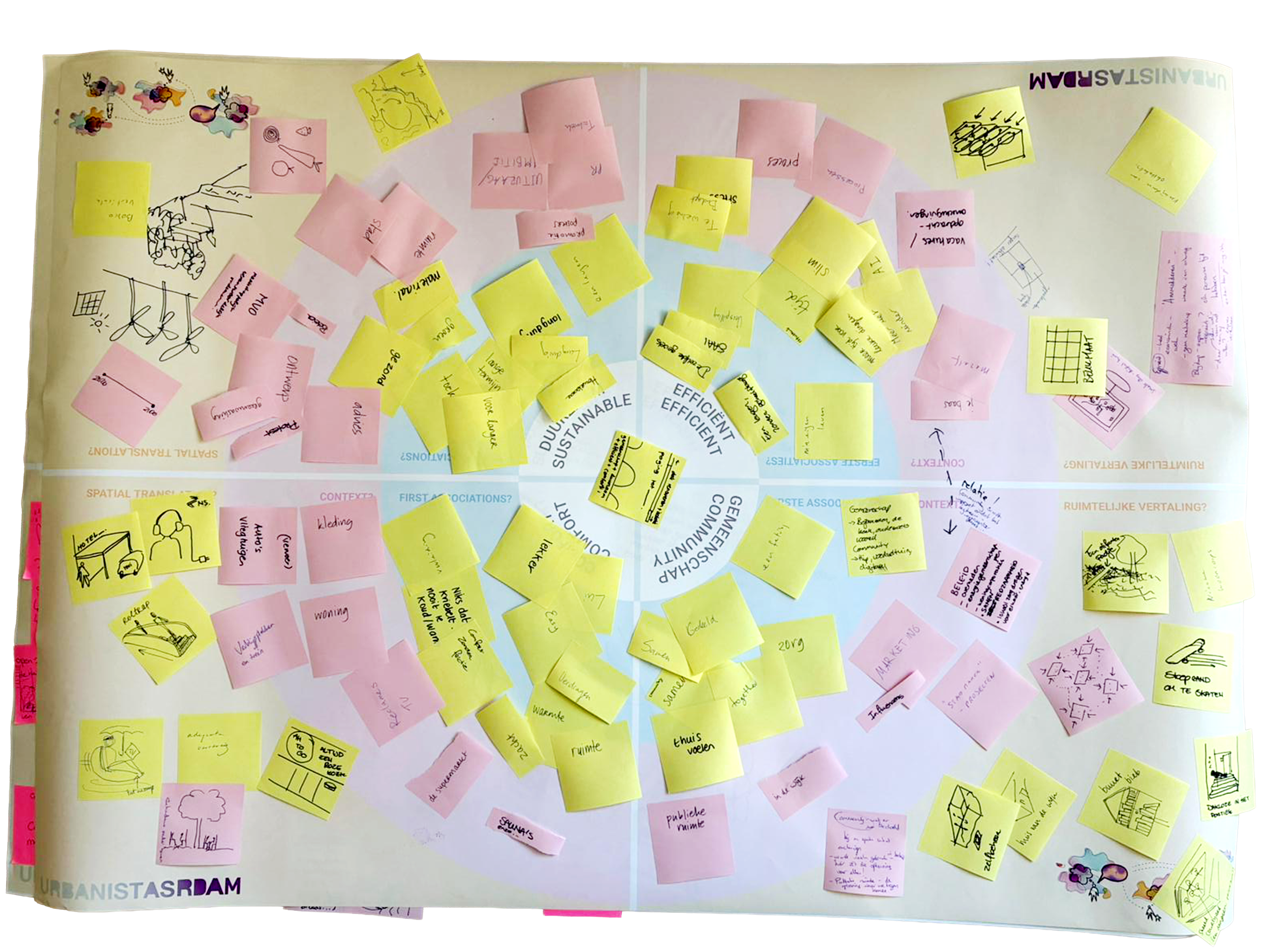
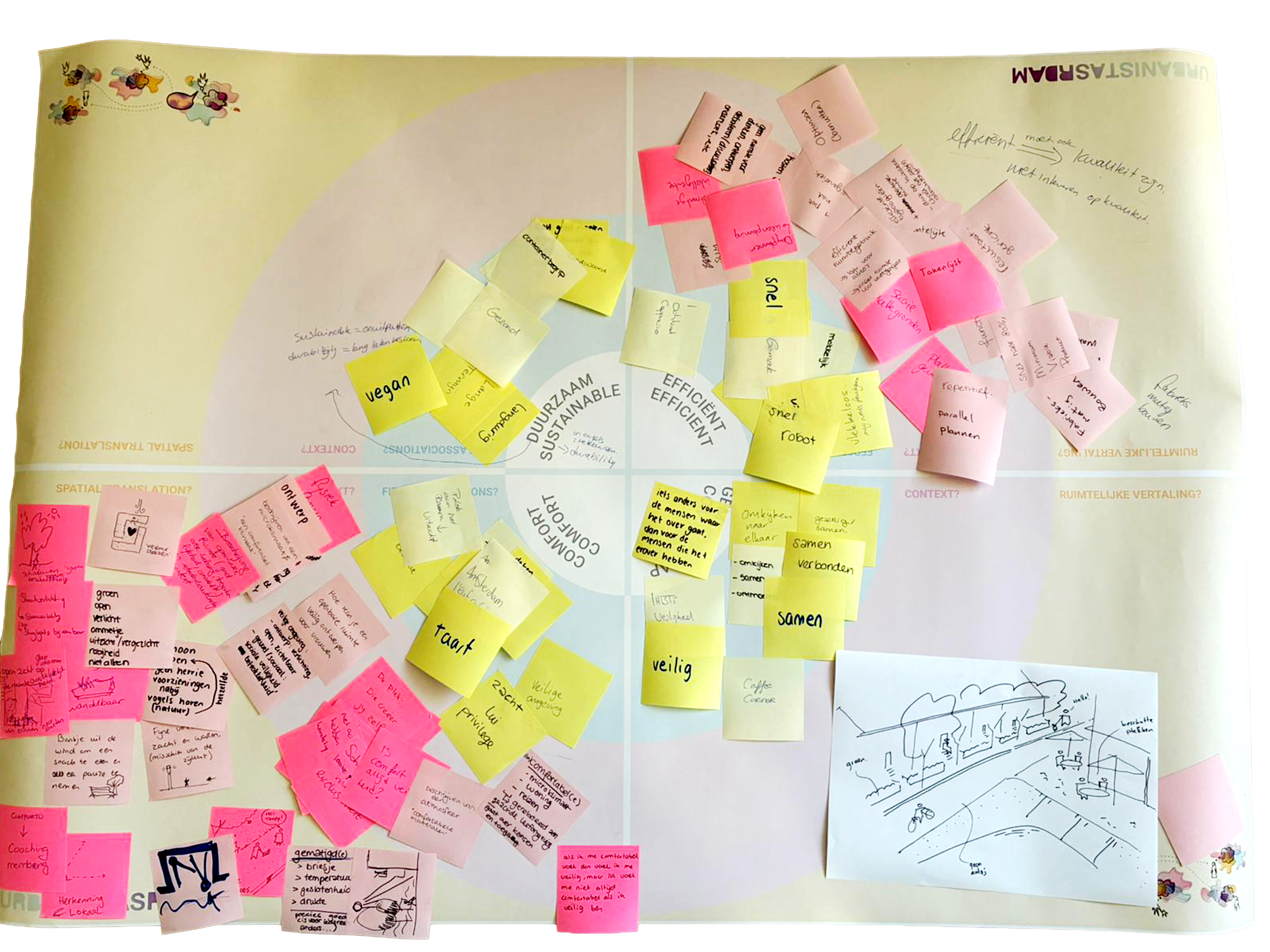
Words never exist in isolation—they are always connected to other words. We mapped these relationships, associations, and connotations to understand the ideas and values that lie behind them.
To investigate this in depth, we focus on four words that emerged from our research as particularly ambiguous and contested.
Reflection from the workshop to be added.
We began this research with a few simple questions. Are there really words that are better or worse? What gets lost in translation? Can we design better by using better vocabulary?
Quite naively, we started by questioning what we actually mean when we describe spaces as inclusive, sustainable, or comfortable. We quickly learned that the meaning and impact of words depend on several factors:
Context: The same word can carry very different connotations depending on the context (e.g. safety, smart).
Time: Words change their meaning over time (free space) or become associated with particular trends (regenerative).
Audience: Language should be tuned to the people we are addressing. For example, nature-inclusive may communicate something different than simply green.
Marketisation: Language is often used to promote and "sell" projects, sugarcoating realities (vibrant), misusing concepts (resilient), or diluting meanings (inclusive, sustainable).
Origins of vocabulary: Many design terms originate in other—and sometimes violent—contexts, such as the military (sabotage), colonialism (pioneers), or neoliberal management (efficient).
After that our aim become to not be moralistic. We stopped being interested in deciding which words are "good" or "bad." Instead, we want to explore how language can inspire designers to imagine and create the Porous City.